
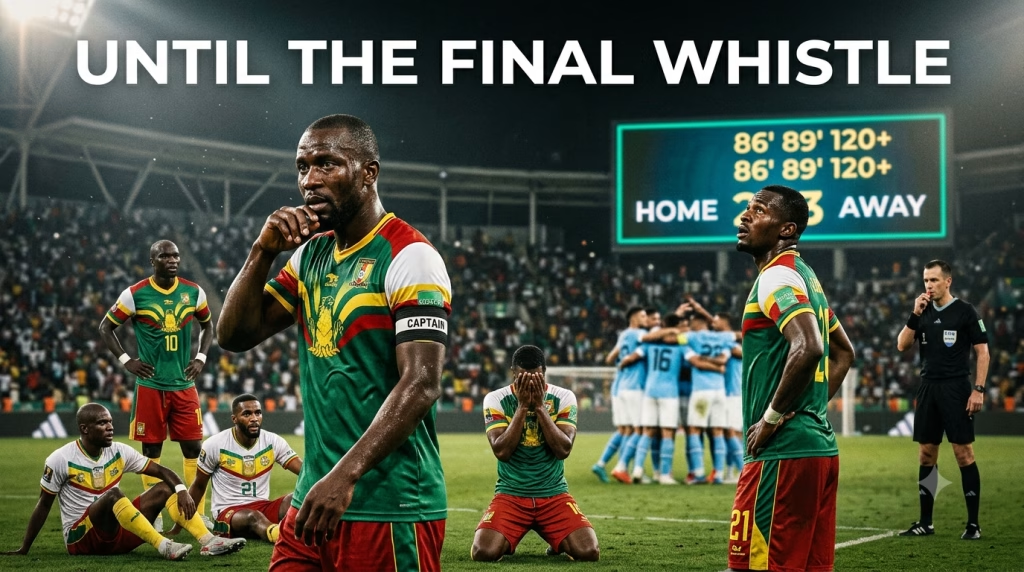
Until the Final Whistle: The Painful World Cup Lesson African Football Must Learn
Some defeats hurt because the opponent was better. Some defeats hurt because luck was not on your side. Some defeats hurt because the referee made a questionable call. But some defeats hurt more deeply because, somewhere in your heart, you know the game was already in your hands.
That was the pain of Senegal against Belgium.
For most of the match, Senegal looked like a team ready to make a statement for Africa. They were not just competing; they were leading. They were not just surviving; they were in control. They had taken a 2–0 lead against Belgium, a European powerhouse with tournament experience, elite players, and the mentality of a team that knows how to suffer until the end. Senegal had one foot in the next round. Africa was watching. The continent was believing. The Lions of Teranga were roaring.
ALSO, READ Cristiano Ronaldo vs Lionel Messi 2026: The GOAT Debate, Talent vs Hard Work
Then came the collapse.
Belgium scored in the 86th minute. Then they scored again in the 89th minute. What looked like a historic African victory suddenly became a dangerous game again. Senegal had led 2–0 until the closing minutes, but Belgium fought back, forced extra time, and eventually won 3–2 through a late Youri Tielemans penalty. FIFA’s match report recorded Belgium’s goals as Romelu Lukaku in the 86th minute, Youri Tielemans in the 89th minute, and Tielemans again from the penalty spot in stoppage time of extra time. Senegal’s goals had come through Habib Diarra and Ismaïla Sarr.
That is not just a football result. That is a sermon.
It is a sermon on focus. It is a sermon on discipline. It is a sermon on concentration. It is a sermon on the danger of celebrating before completion. It is a sermon on one of the greatest weaknesses that has haunted African football for years: the inability to hold victory until the final whistle.
This article is not written to insult African football. Far from it. Africa has made history in this World Cup. Nine out of ten African teams reached the knockout phase, a record-breaking achievement that shows how far the continent has come. CAF confirmed that Algeria, Cabo Verde, Côte d’Ivoire, DR Congo, Egypt, Ghana, Morocco, Senegal, and South Africa all reached the Round of 32, leaving only Tunisia eliminated at the group stage.
That is progress. That is growth. That is proof that African football is no longer coming to the World Cup just to participate. Africa now comes to compete.
But competition is not enough.
To win at the highest level, talent is not enough. Passion is not enough. Energy is not enough. A beautiful first half is not enough. A two-goal lead is not enough. A brave performance is not enough. The real test of champions is not how they start; it is how they finish.
And this is where African football must learn.
The Pattern Is Becoming Too Painful to Ignore
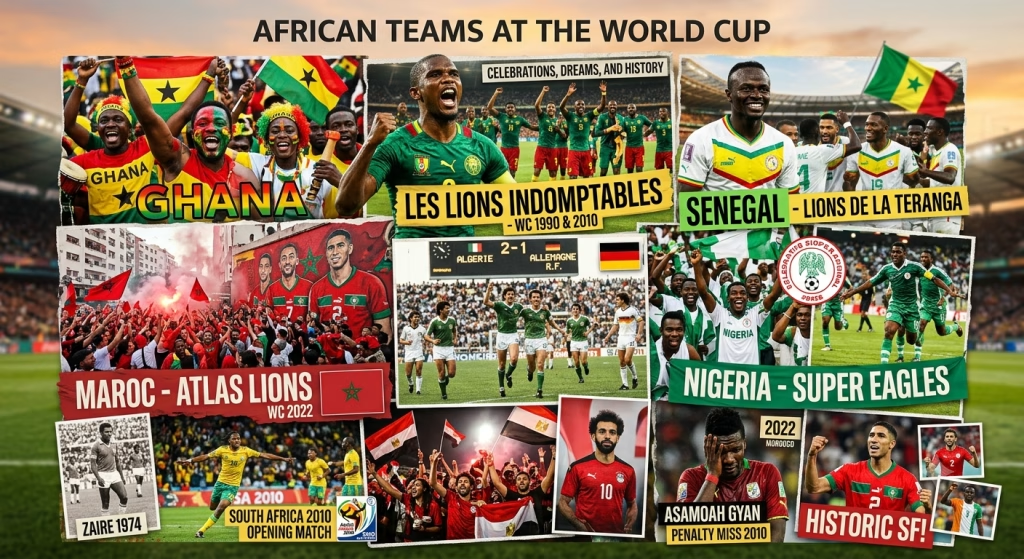
Senegal’s defeat was the most painful because of how close they were. To lead 2–0 until the 86th minute and still lose is not ordinary. That kind of defeat does not happen only because the opponent is strong. It also happens because something breaks mentally. It happens because focus drops. It happens because game management fails. It happens because the team begins to feel the victory before the victory is complete.
But Senegal was not the only African team to suffer this kind of heartbreak.
DR Congo led England in their Round of 32 match. Brian Cipenga gave Congo an early lead in the seventh minute, and for a long period, England looked uncomfortable. But England did what elite tournament teams often do: they stayed in the game, kept believing, and waited for their moment. Harry Kane equalised in the second half and then scored the winner in the 86th minute. DR Congo had been close to a major upset, but they could not carry the lead to the end.
Côte d’Ivoire also had its painful moment against Norway. They had been dominant in parts of the game, and Amad Diallo brought them level in the 74th minute. But again, the late moment went against Africa. Norway scored through Erling Haaland in the 86th minute and eliminated the Ivorians 2–1.
South Africa also exited after a narrow 1–0 defeat to Canada. It was not the same type of collapse as Senegal’s, but it continued the painful story of African teams leaving the tournament after coming so far.
So the question is not whether African teams have talent. They do. The question is not whether African teams can compete. They can. The question is not whether African teams can frighten European and South American teams. They already do.
The real question is this: can African teams finish?
Can we remain disciplined when the world is already praising us? Can we keep our shape when our fans are already celebrating? Can we manage the final ten minutes like warriors, not entertainers? Can we understand that in football, as in life, victory is not confirmed until the final whistle?
The Final Whistle Is the Only Permission to Celebrate
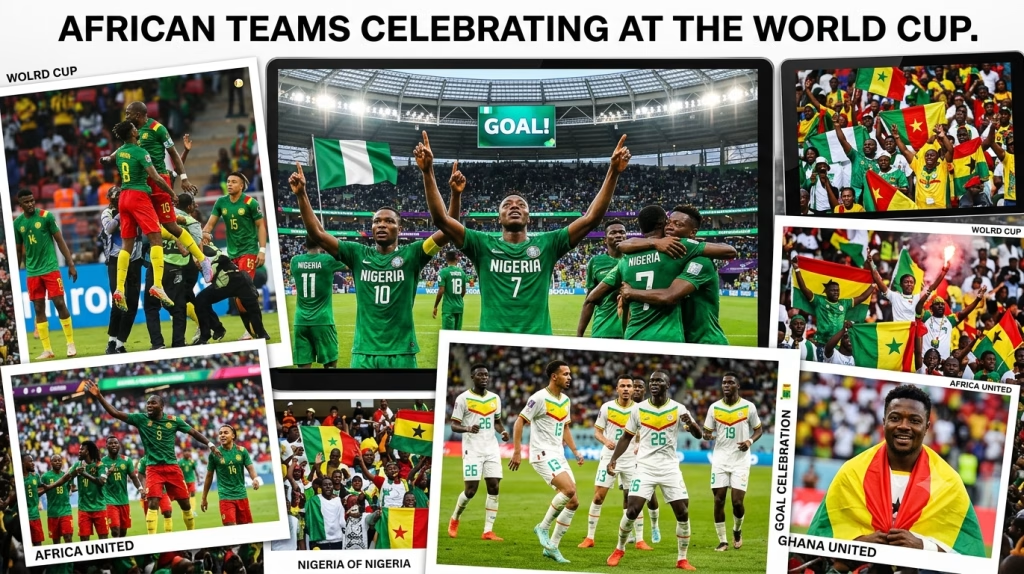
One of the most dangerous moments in football is not when a team is losing. It is when a team is winning.
When a team is losing, the assignment is clear: fight back. Push. Press. Take risks. Chase the game. But when a team is winning, a different kind of test begins. The test is psychological. The test is emotional. The test is tactical. The test is maturity.
Winning teams must know how to suffer. They must know how to slow the game down without becoming afraid. They must know how to clear danger without panicking. They must know how to maintain possession when necessary and defend intelligently when required. They must know when to attack, when to hold, when to frustrate the opponent, and when to kill the rhythm of the game.
This is not cowardice. This is wisdom.
Many African teams know how to play with fire, but not enough know how to manage fire. We know how to run. We know how to celebrate. We know how to express ourselves. We know how to turn a match into a storm of passion and energy. But the World Cup is not won by passion alone. The World Cup is won by structure, discipline, focus, and ruthless concentration.
Senegal’s collapse against Belgium was painful because Belgium did not stop believing. Even when they were 2–0 down, they kept playing like a team that understood one truth: the match is not over until it is over. They made changes. They pushed. They fought. They forced Senegal into uncomfortable moments. They found one goal. Then another. Then the penalty. Then the win.
That is what tournament mentality looks like.
It does not panic too early. It does not celebrate too early. It does not die too early. It fights till the finish.
Over-Excitement: The Silent Enemy of African Football
There is nothing wrong with joy. Football without joy is empty. African football is loved around the world because of its rhythm, color, celebration, energy, and emotional beauty. When an African team scores at the World Cup, the celebration is not only on the pitch. It travels through Lagos, Dakar, Accra, Abidjan, Kinshasa, Johannesburg, Cairo, Casablanca, Nairobi, and beyond. One goal can shake a continent.
But there is a thin line between joy and distraction.
The problem is not celebration. The problem is celebrating as if the assignment is complete when the assignment is still ongoing.
This is not only a football problem. It is an African problem in many areas of life. We often start well. We often rise with fire. We often break barriers. We often surprise people. We often announce ourselves with power. However, too often, after the initial breakthrough, we become complacent. After the first applause, we lose hunger. After the first result, we become distracted. After the first lead, we start thinking the battle is over.
But a lead is not a win.
A promise is not possession. A good start is not completion. A first goal is not qualification. A 2–0 lead is not a victory until the referee blows the final whistle.
This is the lesson Senegal’s defeat must teach us.
You can be ahead and still lose. You can dominate and still be eliminated. You can play better for 85 minutes and still go home after 120 minutes. You can have the world praising you and still end the night in tears.
That is why focus must outlive excitement.
Western Teams Understand the Psychology of the Last Minutes
One thing many European and South American teams have mastered is the psychology of the final minutes. They understand that football matches are often decided when bodies are tired, minds are weak, and emotions are unstable.
The final ten minutes are not ordinary minutes. They are pressure minutes. They reveal who has discipline and who only has energy. They reveal who has structure and who only has talent. They reveal who can think under pressure and who loses shape when the storm comes.
This is where elite teams often punish opponents.
England did it against DR Congo. Congo led early, but England kept fighting until Harry Kane scored the winner in the 86th minute.
Norway did it against Côte d’Ivoire. The Ivorians had equalized, but Haaland struck in the 86th minute to send Norway through.
Belgium did it in the most brutal way against Senegal. Down 2–0 in the 86th minute, they still believed. They scored. They scored again. Then they won it in extra time.
This is not a coincidence. It is a mentality.
These teams understand that the opponent may become nervous. They understand that a winning team can become confused when the pressure suddenly returns. They understand that once the first late goal enters, fear can spread like fire. They understand that a team that was celebrating five minutes earlier can suddenly begin to doubt itself.
That is why elite teams never stop. They do not respect your lead until the whistle confirms it. They do not surrender because you scored first. They do not pity you because you played well. They keep asking questions until the final second.
African teams must learn this.
Morocco: The African Exception That Shows the Way
If there is one African team that has shown a different mentality in recent years, it is Morocco.
Morocco does not play like a team begging for respect. They play like a team that already believes they belong. They defend with organisation. They attack with intelligence. They manage pressure. They suffer without losing identity. They understand tournament football.
In the 2026 World Cup Round of 32, Morocco faced the Netherlands, one of Europe’s strongest football nations. The match ended 1–1, and Morocco advanced 3–2 on penalties.
That is not luck. That is mentality.
Morocco’s historic run to the semifinals in 2022 already showed the world what African football can become when talent meets structure, passion meets discipline, and belief meets tactical maturity. Their continued strength in 2026 confirms that African teams do not need to copy Europe to succeed, but they must learn the habits of elite tournament teams.
Morocco fights till the end. Morocco stays compact. Morocco does not lose emotional control because the opponent has big names. Morocco understands that the game can be won in many ways: by attacking, by defending, by suffering, by delaying, by pressing, by keeping shape, and by taking penalties with courage.
That is the model.
African football does not lack ability. It lacks consistency at the very highest pressure points. Morocco is proving that this can change.
Talent Opens the Door, Discipline Keeps You Inside
African football has always produced talent. Some of the greatest footballers in history have come from Africa or have African roots. Speed, strength, flair, creativity, courage, and athleticism are not our problems.
The problem is not talent.
The problem is what happens after talent gives us an advantage.
Do we become more disciplined or more emotional? Do we become more focused or more excited? Do we become more organised or more careless? Do we use the lead as a platform to control the game, or do we use it as a reason to relax?
Talent can score the first goal. Discipline protects the lead.
Talent can make the world clap. Discipline makes the world respect you.
Talent can take you to the knockout stage. Discipline takes you to the semi-final and final.
Talent can announce you. Discipline establishes you.
Until African football understands this deeply, we will continue to have “brave exits”, “painful defeats”, “heroic performances”, and “so close” stories. But the World Cup does not give medals for almost anything. History does not remember how long you led; it remembers who advanced.
Senegal led. Belgium advanced.
That is the painful truth.
The Problem of Losing Focus Near the Finish Line
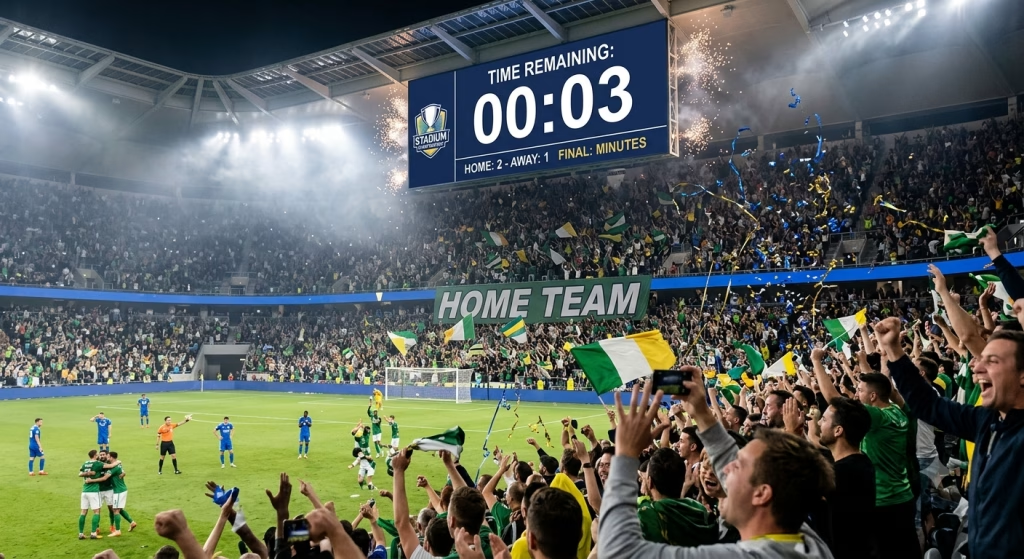
The final stage of anything is always dangerous.
In football, the final minutes are dangerous. In business, the final phase before launch is dangerous. In education, the final semester is dangerous. In ministry, the season after the first breakthrough is dangerous. In life, the moment after success begins is dangerous.
Why? Because the human mind relaxes when it sees the finish line.
Many people do not fail because they never started. They fail because they stopped concentrating too early. They fail because they assumed that being close meant being done. They fail because they allow applause to replace discipline.
This is why Senegal’s defeat is bigger than football.
It is a mirror.
How many times have we seen individuals, organizations, governments, businesses, ministries, and even nations start with promise but fail at the point of delivery? How many times have African institutions begun with vision but lost focus through distraction? How many times have projects started with energy but collapsed near completion because the people involved became careless?
The football pitch is often a reflection of society.
If we cannot maintain concentration for the last ten minutes of a match, how can we maintain concentration for the long journey of national development? If we celebrate a 2–0 lead before the whistle, how often do we celebrate little progress before true transformation? If we lose structure when pressure comes, what does that say about our systems?
This is why the lesson matters.
Africa must become a finished continent.
Not just a continent of potential. Not just a continent of talent. Not just a continent of promise. Not just a continent of “we almost did it”; we must become a continent that finishes.
Until It Is Done, It Is Not Done
This should become the new mindset: until it is done, it is not done.
Until the contract is signed, it is not done. Until the product is delivered, it is not done. Until the degree is completed, it is not done. Until the business is profitable, it is not done. Until the marriage is healthy, it is not done. Until the assignment is fulfilled, it is not done. Until the referee blows the final whistle, the match is not won.
This is the discipline champions carry.
Champions do not confuse progress with completion. They do not confuse advantage with victory. They do not confuse applause with achievement. They do not confuse a good moment with a finished mission.
That is why elite teams remain dangerous until the last second.
They know a match can turn in one minute. They know one mistake can destroy ninety minutes of good work. They know one moment of distraction can rewrite the entire story. They know one careless tackle can lead to a penalty. They know one lost runner can become a goal. They know one emotional reaction can change the game.
So they stay awake.
Africa must stay awake.
What African Teams Must Learn From This World Cup
First, African teams must learn game management. It is not enough to play well; teams must know how to manage different phases of the match. A team leading 2–0 in the 80th minute should not play with the same emotional rhythm as a team chasing the game. The players must know when to slow things down, when to keep the ball, when to draw fouls, when to defend deeper, when to press, and when to take the sting out of the opponent’s momentum.
Second, African teams must improve mental conditioning. Fitness is not only physical. There is mental fitness. Can a defender make the right decision after 85 minutes? Can a midfielder avoid panic when the opponent scores late? Can a goalkeeper organise the defence when the stadium is shaking? Can a captain calm the team when fear is rising? These are not small things. They decide on tournaments.
Third, coaches must prepare teams for pressure moments. The final ten minutes should be trained like a separate game. Teams should practise defending a lead with one goal up, two goals up, and one man down. They should practise what to do after conceding late. They should practice how to respond emotionally when the opponent suddenly gains momentum.
Fourth, leadership on the pitch must improve. Every great tournament team has players who can calm the storm. When Belgium scored the first goal against Senegal, that was the moment Senegal needed leaders to slow the game down, reorganise the team, and remind everyone that they were still ahead. Instead, the game slipped further away.
Fifth, African teams must stop playing like underdogs once they are ahead. Sometimes African teams play well enough to lead, but emotionally, they still behave like they are surprised to be leading. That must change. If you score against Belgium, England, France, Brazil, Argentina, Germany, Spain, or the Netherlands, do not become shocked by your own success. Stay professional. Stay cold. Stay focused. You are not there by accident.
The World Does Not Reward Sentiment
One of the hardest truths in football is that the world does not reward sentiment. Nobody gives you the next round because you played beautifully. Nobody gives you victory because your story is emotional. Nobody gives you a qualification because your continent is praying for you.
Football is cruel because football is honest.
The scoreboard does not care how much effort you made. The bracket does not care how close you were. History does not care that you led for 85 minutes. Once the game ends, the winner moves on and the loser goes home.
That is why Africa must stop being satisfied with sympathy.
We have had enough of “they tried.” We have had enough of “they made us proud.” We have had enough of “they were unlucky.” We have had enough of “the referee cost us.” Sometimes these things are true. Sometimes the officiating is questionable. Sometimes luck is cruel. Sometimes the ball simply refuses to enter.
But if we want to become champions, we must also ask harder questions.
What could we have controlled? What did we fail to manage? Where did our concentration drop? Why did we panic? Why did we concede so late? Why did we not close the game? Why did we allow the opponent to believe again?
These questions are painful, but they are necessary.
A Message to African Players: Finish the Job
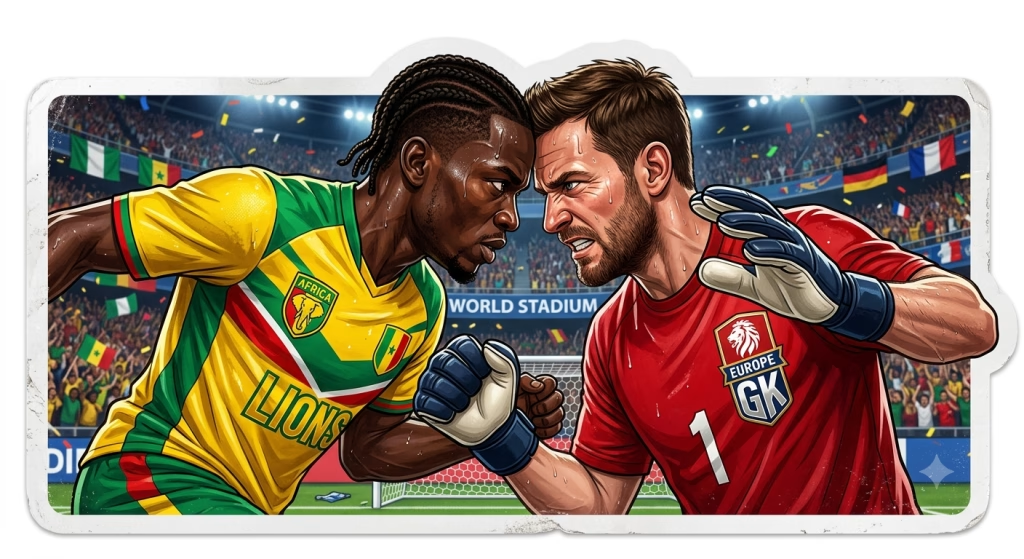
To every African player representing the continent, hear this clearly: you are talented enough to compete with the world. You are strong enough. You are gifted enough. You are fast enough. You are technical enough. You are brave enough.
But now, you must become disciplined enough.
Do not celebrate too early. Do not lose focus because you scored. Do not relax because the crowd is singing. Do not assume the opponent is finished because they look tired. Do not forget that world-class teams can look dead and still rise in the final minutes.
When you are leading, become more focused. When you are close to victory, become more alert. When the opponent is desperate, become more organised. When your body is tired, let your mind become sharper. When the game enters the final ten minutes, treat every second like a final.
Because at the World Cup, one second can destroy everything.
A late goal can erase a dream. A late penalty can break a continent’s heart. A late mistake can turn heroes into eliminated teams.
So finish the job.
A Message to Africans Beyond Football
This lesson is not only for footballers. It is for all of us.
Do not stop at potential. Do not stop at the announcement. Do not stop at early success. Do not stop because people are clapping. Do not stop because you are ahead. Do not stop because things are working. Do not stop because the finish line is near.
Many people lose in life because they celebrate too early.
They start a business and relax after the first big sale. They begin a course and lose focus after passing the first exam. They enter a relationship and stop investing after the wedding. They start a ministry and become careless after the first crowd gathers. They begin a project and abandon discipline when recognition comes.
But success belongs to finishers.
The world is not changed by starters alone. The world is changed by finishers. Africa does not only need people who can begin with fire; Africa needs people who can complete with discipline.
We need finishers in football. Finishers in government. Finishers in business. Finishers in education. Finishers in technology. Finishers in ministry. Finishers in the family. Finishers in national development.
We need people who understand that the last whistle matters.
The Pain Must Produce Wisdom
Senegal’s defeat should hurt. It should hurt because they were close. It should hurt because they had the game. It should hurt because Africa believed. It should hurt because it was avoidable.
But pain is wasted when it does not produce wisdom.
If African football learns from this, then the heartbreak will not be useless. If coaches study these collapses, if players improve their mentality, if federations invest in sports psychology and tactical education, if fans also learn to demand more than brave failure, then this World Cup can become a turning point.
Africa has already shown the world that it belongs. Nine teams in the knockout phase is no small achievement. That is historic. That is powerful. That is a statement.
But now Africa must move from representation to domination.
We should not only be happy that many African teams qualified for the knockout stage. We should ask how many can reach the quarterfinals. How many can reach the semifinals? How many can reach the final? How many can win it?
Morocco showed in 2022 that an African team can reach the semi-final. Morocco is again showing in 2026 that African football can compete with maturity and belief. The next step is for more African teams to adopt that mindset.
Not emotional football only. Not talented football. Not brave football only.
Disciplined football. Intelligent football. Ruthless football. Finishing football.
Conclusion: Fight Till the Finish
The lesson is simple, but it is powerful: fight till the finish.
Do not fight for 70 minutes. Do not fight for 80 minutes. Do not fight for 85 minutes. Fight until the final whistle. Fight until the job is done. Fight until the result is sealed. Fight until the dream is no longer vulnerable.
Senegal’s collapse against Belgium will be remembered as one of the most painful moments of this World Cup because they were so close to victory. DR Congo’s late defeat to England and Côte d’Ivoire’s late heartbreak against Norway also remind us that the final minutes are where dreams are either protected or destroyed.
Africa must learn.
When we score, we must stay focused. When we lead, we must become more disciplined. When we are close, we must become more ruthless. When the opponent is desperate, we must become more intelligent. When the world is already celebrating us, we must remember that the game is not over.
Because until the final whistle, victory is not victory.
Until the final whistle, celebration is premature.
Until the final whistle, the enemy can still fight back.
Until the final whistle, the dream can still be lost.
So to African football, and to Africa as a whole, this is the message: stop losing focus near the finish line. Stop confusing a lead with a win. Stop allowing over-excitement to destroy your assignment. Stop giving opponents hope when you should be closing the door.
The world’s best teams fight till the finish.
Africa must do the same.
Because champions are not just those who start well.
Champions are those who finish.